Българското кисело мляко: от древните традиции до вашата кухня
Въведение
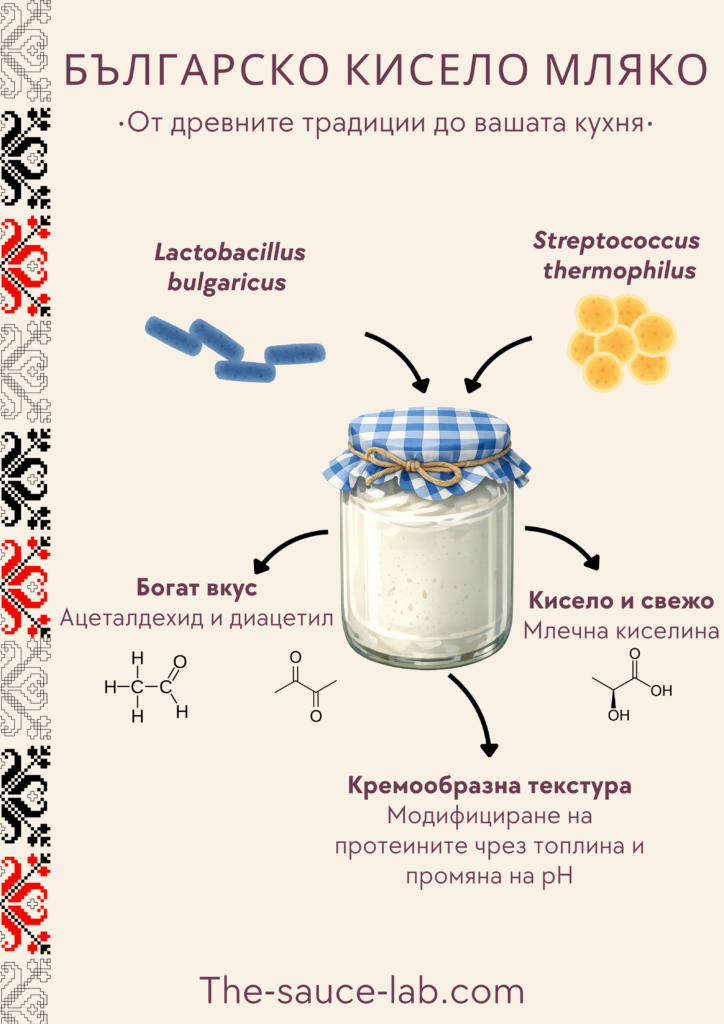
Един от най-известните български ферментирали продукти е българското кисело мляко. То е гъст, кремообразен и кисел ферментирал млечен продукт, който се консумира в България и по света от векове. Българското кисело мляко не е единственият продукт, съдържащ Lactobacillus bulgaricus и Streptococcus thermophilus — основните бактерии, използвани при производството на кисело мляко.
Тези микроорганизми традиционно се използват заедно, като взаимодействието между тях е от ключово значение за развитието на характерния вкус и плътната текстура на киселото мляко. С времето те се превръщат в неразделна част от българската млечна традиция и култура.Българското кисело мляко се е приготвяло и продължава да се приготвя в селските кухни, като техниката се предава от поколение на поколение. Макар днес да можете просто да си купите кофичка кисело мляко от магазина, приготвянето му у дома е по-лесно и по-вкусно, отколкото може би си представите.
Дълбоките корени на българското кисело мляко
Ранна история на ферментиралите млечни продукти
Традициите за ферментация на мляко по българските земи се развиват постепенно и са повлияни от намиращите се на територията племена и народи— от неолитните земеделци през траките, славяните и прабългарите. Всяка от тези групи вероятно е допринесла със свои техники и предпочитания, които в крайна сметка са се слели в продукта, познат днес като кисело мляко (1,2).
Доказателства за ферментирало мляко са открити в Азия и Европа и датират от около 8000 г. пр.н.е. Най-вероятно това е свързано с периода, когато Homo sapiens започва да опитомява млекодайни животни като кози, овце и крави. Продукти, наподобяващи съвременното кисело мляко, са открити в Месопотамия и се датират към периода 5000–6000 г. пр.н.е. (1,2).
Българска география, племена и ранни практики за приготвяне на кисело мляко
Съществуват данни, че Lactobacillus delbrueckii subsp. bulgaricus може да се срещне върху някои растения. Най-вероятно млякото от млекодайните животни в даден момент е влезнало в контакт с растения, върху които са се намирали тези бактерии, което е доволо до случайното му вкисване.
Интересното е, че в България съществува стара традиция определен растителен вид да се поставя във вече преварено мляко и то да се инкубира при 45 °C, в резултат на което се получава кисело мляко с плътен коагулум (3).
България, разположена на Балканския полуостров между Западна Европа и Близкия изток, има благоприятен климат за отглеждането на крави, овце и кози. Това отчасти обяснява богатата традиция на българите в областта на млечната ферментация. Археологическите находки от неолитното селище Азмашка могила край днешна Стара Загора (около 6000 г. пр.н.е.) включват останки от домашни животни, сред които и видове, използвани за добив на мляко (1,2). Тези данни свидетелстват за развитието на животновъдството и употребата на животински продукти от неолитните общности.
Тракийското племе бизалти, обитавало територии в района на днешните Шумен, Търговище и Варна, е използвало ферментирали млечни продукти като част от хранителната си традиция (1,2).
Известно е също, че прабългарите са ферментирали кобилешко мляко в кожени мехове, направени от стомасите на животни. То е било основна храна за тях по време на военни походи. Тази напитка е известна като кумис.
Славяните приготвяли сура — вид кисело мляко, ферментирало в дървени бъчви през лятото, което консумирали през зимата. Най-вероятно древните българи са опитали овчето кисело мляко, приготвяно от траките и славяните, и постепенно са заменили кобилешкото мляко с кисело мляко.
Българското кисело мляко получава международно признание още през 1542 г., когато според сведения френският крал Франсоа I е бил излекуван от диария след консумацията му.
Научно признание и световно влияние
Както вероятно сте забелязали, една от бактериите, отговорни за ферментацията на киселото мляко, се нарича L. bulgaricus. Това не е случайност. През 1905 г. българският студент по медицина в гр. Женева д-р Стамен Григоров за първи път описва бактерията, отговорна за ферментацията на киселото мляко. Той идентифицира млечнокисела пръчковидна бактерия, която по-късно е наречена Bacillus bulgaricus (днес Lactobacillus delbrueckii subsp. bulgaricus). Това откритие подтиква руския биолог и бъдещ Нобелов лауреат Иля Мечников да предположи, че високата продължителност на живота сред българските селяни в планинските райони може да е свързана с редовната консумация на кисело мляко (1,2).
В началото на XX век много лекари насърчават консумацията на кисело мляко като терапия при определени храносмилателни нарушения. Този медицински ентусиазъм съвпада с основаването на Danone от Исак Карасо, който е повлиян от изследванията върху млечнокиселите бактерии и потенциалните им ползи за здравето. Danone е основана в Барселона и първоначално разпространява киселото мляко чрез аптеките, а по-късно разширява дейността си и във Франция.
Млечните продукти са важна част от европейската диета, като годишната им консумация възлиза на повече от 45 милиарда метрични тона. През 2019 г. страните от ЕС са произвели общо 6,1 милиона тона кисело мляко. Извън Европа българското кисело мляко придобива особена популярност в Япония, където е въведено през XX век. Популярността му се свързва с произхода му от България, както и с асоциацията му с Lactobacillus bulgaricus и потенциалните пробиотични ползи за здравето. В Япония продуктът е познат като „Bulgaria Yoghurt“ (ブルガリアヨーグルト) (4).
През 2020 г. в България са преработени приблизително 663 милиона литра мляко. Макар страната да произвежда сравнително малки количества кисело мляко в сравнение с водещите производители в Европа, продуктът заема важно място в българската хранителна култура и традиции.
Какво всъщност представлява българското кисело мляко
Вкусов профил
В основата на българското кисело мляко лежи ферментационният процес. Ако опитате автентично домашно българско кисело мляко, ще се насладите на:
- Кремообразна текстура
- Кисел вкус
- Лека сладост
Тези характерни вкусови качества се дължат на действието на двете основни бактериални култури, участващи във ферментацията на млякото — L. bulgaricus и S. thermophilus — както и на взаимното им взаимодействие. Съвместното им използване в производството на кисело мляко има дългогодишна традиция и е предмет на научен интерес поради потенциалните ползи за здравето.
Българското кисело мляко е традиционен български млечен продукт и един от най-разпознаваемите хранителни продукти на страната.
Стандарти и начин на производство
То се приготвя от пастьоризирано мляко, инокулирано със стартерна култура от две основни млечнокисели бактерии — Streptococcus thermophilus и Lactobacillus delbrueckii subsp. bulgaricus. В България киселото мляко се произвежда предимно от краве мляко, но могат да се използват и овче, козе или биволско мляко, както и комбинации от различни видове мляко, например краве и овче или краве и биволско (5).
Съгласно изискванията на Българския институт за стандартизация готовото кисело мляко трябва да съдържа най-малко 10⁷ CFU/g Lactobacillus delbrueckii subsp. bulgaricus и 10⁸ CFU/g Streptococcus thermophilus (5).
Млякото, използвано за производството на кисело мляко, не трябва да съдържа антибиотици или други инхибиращи вещества, които биха могли да потиснат развитието и активността на млечнокиселите бактерии (5).
Българският институт за стандартизация определя и специфични изисквания към органолептичните характеристики на готовия продукт. Повърхността трябва да бъде гладка и лъскава, а цветът — от бял до кремав, с известни вариации в зависимост от вида на използваното мляко. Коагулумът трябва да бъде гладък и хомогенен, без видимо отделяне на суроватка. Вкусът трябва да бъде специфичен, приятен и характерен за използваното мляко. При някои видове кисело мляко, например произведено от овче или биволско мляко, консистенцията може да бъде леко зърнеста (5).
Както индустриалното, така и домашното производство на кисело мляко се основават на едни и същи основни принципи, макар да се различават по отношение на мащаба и използваното оборудване.
Производството започва с възможно най-прясно сурово мляко, което се филтрира за отстраняване на механични примеси. Следва пастьоризация чрез нагряване до 93–95 °C за 15–30 минути, последвана от бързо охлаждане до 45–46 °C. След достигане на подходящата температура млякото се инокулира със стартерна култура, съдържаща L. bulgaricus и S. thermophilus. Това може да се осъществи по един от три основни начина: чрез лиофилизирана стартерна култура, чрез backslopping — добавяне на предварително приготвено кисело мляко — или чрез течна висококонцентрирана стартерна култура, използвана основно в промишленото производство (5).
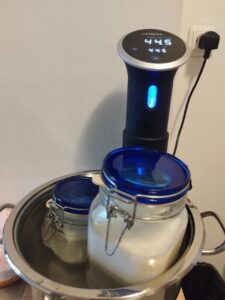
След инокулирането млякото се разпределя в чисти съдове, затваря се и се инкубира при подходяща температура. В домашни условия това може да се постигне чрез увиване на съдовете с одеяло, докато в контролирани условия могат да се използват инкубатор при 44 °C ± 2 °C или sous vide система. В зависимост от използваната стартерна култура инкубацията продължава приблизително 2–8 часа. След приключване на ферментацията киселото мляко първоначално се охлажда до около 20 °C, след което се съхранява в хладилник при 2–6 °C. При тези условия максималният срок на съхранение е 20 дни (5).
Необходимите продукти и оборудване за домашно кисело мляко
За приготвянето на кисело мляко у дома са необходими само няколко основни съставки и инструмента. Качеството на използваните продукти обаче има съществено значение за крайния резултат:
- Прясно мляко – Пълномасленото мляко е най-подходящо за получаване на плътно, богато и кремообразно кисело мляко.
- Стартерна култура – Качествено българско кисело мляко с живи бактериални култури (backslopping) или специфична лиофилизирана стартерна култура, съдържаща L. bulgaricus и S. thermophilus.
- Термометър – Контролът на температурата е от съществено значение за успешната ферментация.
- Буркани или други подходящи съдове – За инокулиране и инкубиране на млякото.
- По желание: sous vide система или инкубационна камера – За по-прецизен контрол на температурата по време на ферментацията.
В крайна сметка доброто кисело мляко започва с добри съставки. Изборът на качествено мляко и надеждна стартерна култура може значително да повлияе върху вкуса, консистенцията и аромата на готовия продукт.
Стъпка по стъпка — как да направите българско кисело мляко у дома
Ето как да превърнете обикновеното мляко в домашно българско кисело мляко:
- Прецедете млякото – Прецедете прясното мляко през фина цедка, за да отстраните евентуални твърди частици.
- Загрейте млякото – Загрейте бавно до 93–95 °C и поддържайте тази температура за 15–30 минути. Освен че намалява количеството на нежеланите микроорганизми, този процес предизвиква промени в млечните протеини, които подпомагат образуването на по-плътен и стабилен коагулум.
- Охладете до 45–46 °C – Охладете млякото бързо до 45–46 °C. Тази температура е подходяща за развитието на L. bulgaricus и S. thermophilus и ограничава възможността за развитие на други микроорганизми преди добавянето на стартера.
- Добавете стартера – Добавете около 50 g живо българско кисело мляко от предишна партида или количеството лиофилизирана стартерна култура, препоръчано от производителя. Разбъркайте внимателно, докато културата се разпредели равномерно.
- Инкубирайте – Разпределете млякото в чисти буркани и го оставете да ферментира при около 44 °C ± 2 °C за приблизително 4–8 часа. Подходящи са йогурт машина, инкубатор или друг съд, който може да поддържа стабилна температура. Ферментацията е завършила, когато млякото се е сгъстило и е образувало плътен коагулум.
- Охладете – След приключване на ферментацията охладете киселото мляко до около 20 °C, след което го поставете в хладилник за поне няколко часа. Охлаждането спира значително ферментационната активност и позволява на коагулума да се стабилизира, а вкусът да се развие напълно.
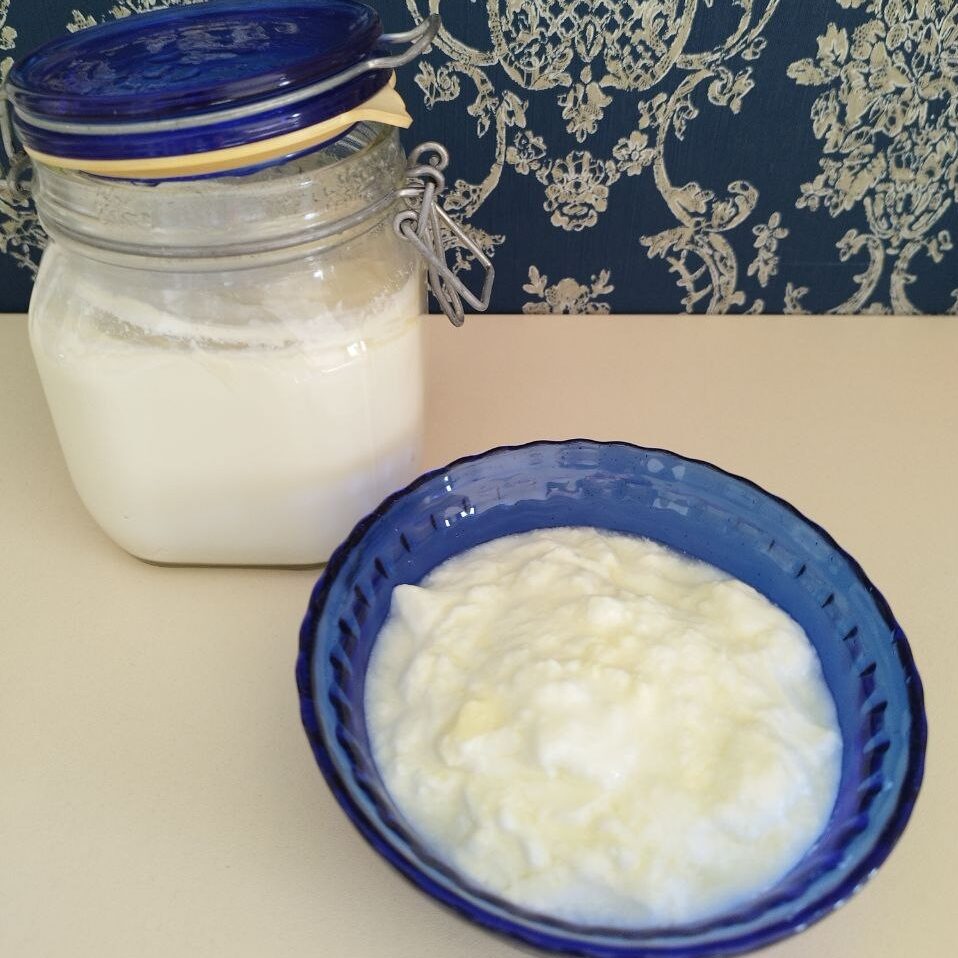
Класическото българско кисело мляко трябва да има плътен и гладък коагулум, приятна киселинност и характерен млечен аромат. Не бързайте — след като сте създали подходящите условия, оставете бактериалната култура да свърши останалото.
Как да използвате българското кисело мляко
Българското кисело мляко е чудесно само по себе си, но неговата плътна текстура и характерен вкус го правят и изключително универсална съставка.
Традиционни български приложения
- Закуска или междинно хранене – Самостоятелно или комбинирано с ядки, гранола и плодове.
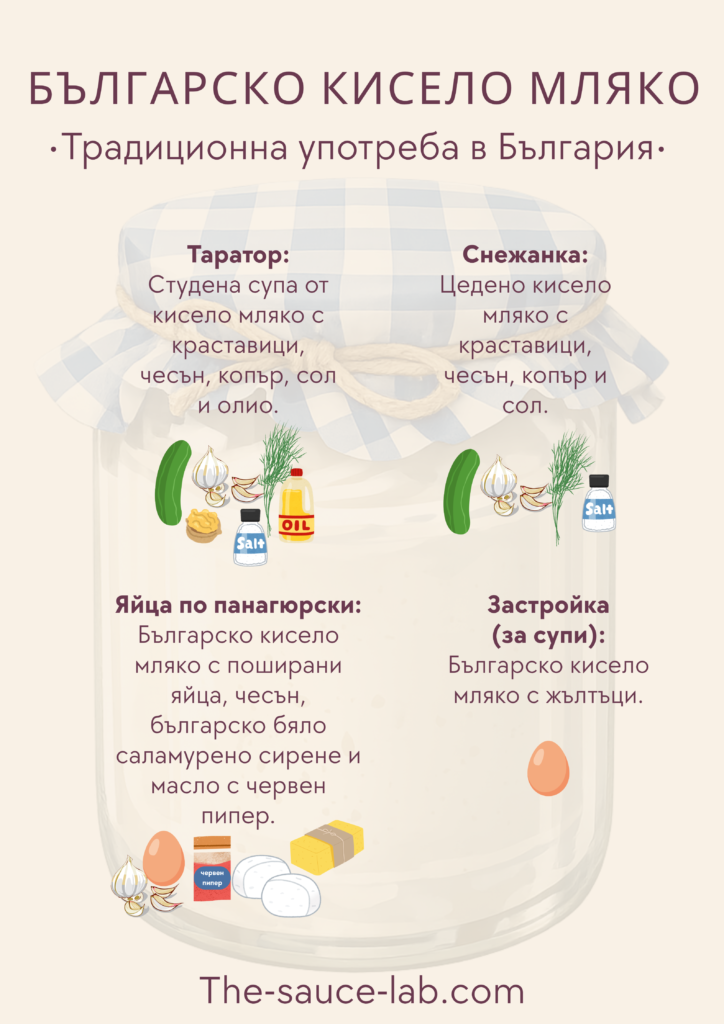
- Таратор – Смесете българско кисело мляко с краставици, чесън, копър, щипка сол и малко олио за класическа студена българска супа. Чудесно допълнение към таратора са натрошените орехи.
- Салата „Снежанка“ – Прецедено кисело мляко, краставици, чесън, сол, олио и копър. Орехите и магданозът също са отлични допълнения.
- Съставка в готвенето – Използвайте го в маринати, печива или кремообразни сосове.
- Яйца по панагюрски – Поширани яйца върху българско кисело мляко с чесън, гарнирани с бяло саламурено сирене и горещо масло с ароматен сладък червен пипер.
- Застройка за супи с кисело мляко и яйце – Застройките с кисело мляко и яйце са много характерни за българската кухня. Почти всяка традиционна супа използва някакъв вид застройка, която придава плътност и завършена текстура. Застройката се приготвя от яйчен жълтък и българско кисело мляко, като към тях постепенно се добавя малко горещ бульон, за да не се пресече сместа. След изравняване на температурите застройката се добавя към супата при постоянно разбъркване.
Глобални и алтернативни приложения
- Mast-o khiar – Персийско ястие, приготвено с кисело мляко, персийски краставици, стафиди, чесън, нарязани орехи и подправки като мента, копър, магданоз и листенца от дамаска роза.
- Yayla çorbası – Турска супа, приготвена с ориз, кисело мляко, яйчни жълтъци и билки като мента, тученица и магданоз. Различни варианти се срещат в целия Близък изток.
- Дзадзики или cacık – Класически дип или сос, приготвен от прецедено кисело мляко, краставици, чесън, сол, зехтин, оцет или лимонов сок и билки като копър, мента, магданоз и мащерка.
Как да го съхранявате
Правилното съхранение помага да запазите качеството и безопасността на киселото мляко за по-дълго:
- Съхранявайте го в затворен съд в хладилник при температура между 2 и 6 °C.
- Консумирайте го в рамките на 20 дни, в съответствие с препоръчителния срок на съхранение.
- Не се препоръчва замразяване, тъй като то може да промени структурата и консистенцията на киселото мляко.
Ниската температура забавя метаболитната активност на бактериалните култури и по този начин ограничава по-нататъшното подкиселяване, като същевременно спомага за запазване на характерния вкус и консистенция на продукта.
Науката среща традицията
На пръв поглед приготвянето на кисело мляко изглежда просто — мляко и две млечнокисели бактериални култури. Именно взаимодействието между тях обаче превръща млякото в продукт с характерната му кремообразна текстура, приятна киселинност и уникален вкус.
1. Загряване
Загряването на млякото има две основни функции.
Първо, то подобрява микробиологичната безопасност, като намалява количеството на нежеланите и потенциално патогенни микроорганизми. Тази топлинна обработка не трябва да се бърка с UHT обработка или стерилизация — например автоклавиране при 121 °C под налягане или ултрависокотемпературна обработка при 135–150 °C за няколко секунди. При производството на кисело мляко млякото се нагрява при по-умерени условия, които едновременно с това създават благоприятна среда за бързото развитие и подкиселяване на млякото от Lactobacillus bulgaricus и Streptococcus thermophilus (6,7).
Второ, нагряването променя структурата и взаимодействията на млечните протеини. По-специално, денатурацията на суроватъчните протеини подпомага образуването на комплекси между тях и казеиновите мицели. Основните суроватъчни протеини включват α-лакталбумин, β-лактоглобулин, серумен албумин и имуноглобулини. При температури над 70 °C β-лактоглобулинът се разгъва и експонира реактивни сулфхидрилни (–SH) групи, които могат да участват във формирането на връзки с други млечни протеини (6,7).
Млякото съдържа и наноструктури, известни като казеинови мицели. Те са диспергирани в млечната фаза и са изградени основно от αs1-, αs2-, β- и κ-казеин, свързани с минерали, предимно калций и фосфор.
κ-Казеинът е разположен предимно на повърхността на казеиновите мицели, където допринася за тяхната стабилност. Неговият хидрофилен и отрицателно зареден външен слой създава електростатично и стерично отблъскване между мицелите и ограничава тяхната агрегация при естественото pH на млякото.
По време на нагряването денатуриралият β-лактоглобулин взаимодейства с κ-казеина на повърхността на казеиновите мицели. В резултат се образуват комплекси между суроватъчните протеини и казеина, които променят повърхностните свойства на мицелите и увеличават способността им да участват в последващата агрегация.
Когато L. bulgaricus и S. thermophilus ферментират лактозата и произвеждат млечна киселина, pH на млякото постепенно се понижава. При достигане на подходяща киселинност електростатичното отблъскване между казеиновите мицели намалява и те започват да се асоциират, образувайки триизмерна белтъчна мрежа. Тази мрежа задържа вода и други компоненти на млечната фаза и е в основата на плътната, кремообразна текстура на киселото мляко (6,7).
2. Протосътрудничество
Streptococcus thermophilus и Lactobacillus bulgaricus взаимно подпомагат развитието си по време на ферментацията чрез специфично симбиотично взаимодействие.
S. thermophilus произвежда редица метаболити, сред които пирогроздена, мравчена и фолиева киселина, орнитин, дълговерижни мастни киселини и CO₂. Освен това намалява количеството на разтворения кислород в млякото, създавайки по-благоприятни условия за развитието на L. bulgaricus. Бактерията активно продуцира и млечна киселина, с което постепенно понижава pH на средата до стойности, благоприятни за развитието на L. bulgaricus (6,7).
От своя страна, L. bulgaricus проявява силна протеолитична активност, разграждайки млечните протеини до пептиди и свободни аминокиселини. Освен това произвежда метаболити, сред които путресцин, които могат да подпомагат развитието на S. thermophilus. Това взаимно благоприятно взаимодействие между двете бактерии се определя като протосътрудничество и е от съществено значение за ефективното протичане на ферментацията. То допринася както за бързото развитие на бактериалните култури и понижаването на pH, така и за образуването на ароматни съединения, които са важни за характерния вкус и аромат на киселото мляко (6,7).
3. Понижаване на pH и формиране на вкуса
Лактозата е естествен дизахарид, съставен от глюкоза и галактоза, и е основният източник на въглерод за бактериите, участващи във ферментацията на киселото мляко. По време на ферментацията метаболизмът на лактозата води до образуването на млечна киселина и летливи съединения, които допринасят за аромата и вкуса на киселото мляко (6,7,8).
Понижаването на pH на млякото е ключов фактор за формирането на структурата и консистенцията на киселото мляко. То се понижава в резултат на продукцията на млечна киселина. При естественото pH на млякото (около pH 6,6) казеиновите мицели са отрицателно заредени и се отблъскват взаимно, което поддържа млякото в течно състояние. Когато L. bulgaricus и S. thermophilus започнат да произвеждат млечна киселина, pH се понижава до изоелектричната точка на казеина (около pH 4,6), което намалява отблъскването между мицелите. Това позволява на мицелите да се агрегират и да образуват протеинова мрежа, която придава на киселото мляко неговата гелообразна текстура (6,7,8).
Лактозата навлиза в бактериалните клетки чрез пермеази или посредством фосфотрансферазната система (PTS) и се хидролизира от β-галактозидаза до глюкоза и галактоза (или галактозо-6-фосфат). Глюкозата навлиза в гликолизата, докато галактозо-6-фосфатът се метаболизира посредством пътя на тагатозо-6-фосфата. Тези процеси водят до образуването на съединения като ацеталдехид, ацетоин, диацетил и 2,3-пентандион, които допринасят за характерния вкус на българското кисело мляко (6,7,8).
Интересно е, че L. bulgaricus и S. thermophilus не са единствените бактерии, които се срещат в българското кисело мляко. Данните сочат, че допълнителни видове също могат да допринасят за развитието на вкуса.
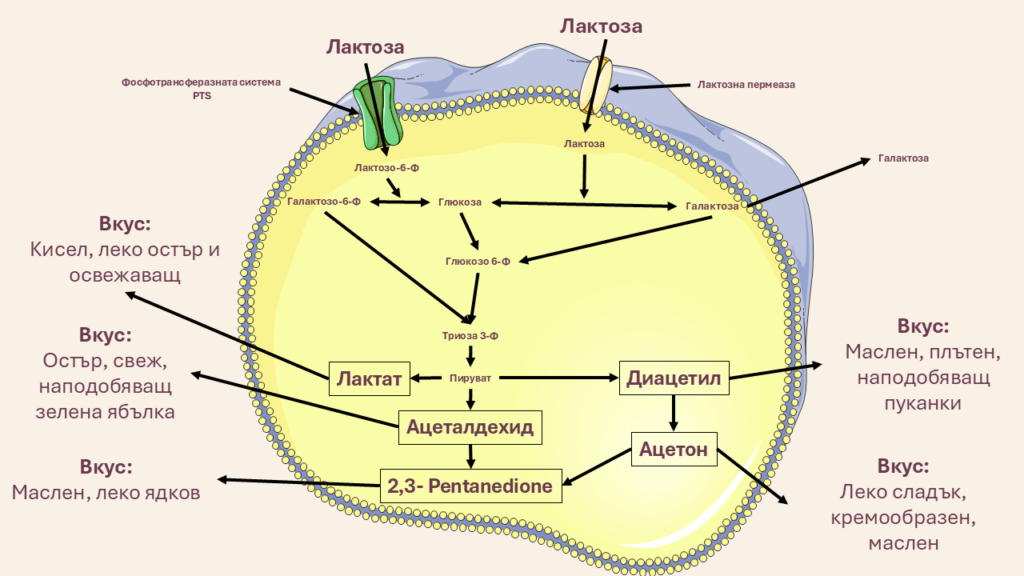
Интересно е, че L. bulgaricus и S. thermophilus не са единствените бактерии, които се срещат в българското кисело мляко. Данните сочат, че допълнителни видове също могат да допринасят за развитието на вкуса.
Продукт: Кисело мляко
Стартови щамове: L. delbrueckii subsp. bulgaricus, S. thermophilus
Допълнителна микрофлора: L. helveticus, L. paracasei, L. fermentum, Lacticaseibacillus rhamnosus, Leuconostoc mesenteroides, Leuconostoc pseudomesenteroides, Weissella confusa, Pediococcus acidilactici, Lactococcus lactis, Enterococcus faecium (6,7,9)
4. Аминокиселини, биоактивни пептиди и здраве
По време на ферментацията млечнокиселите бактерии произвеждат биоактивни вещества, които могат да имат благоприятни ефекти върху здравето. Тяхната активност освобождава свободни аминокиселини и олигопептиди, включително лизин, триптофан и L-аргинин. Научни данни показват, че L-аргининът и неговите прекурсори могат да имат благоприятен ефект върху сърдечносъдовото здраве, ендотелната функция, хипертонията, исхемично-реперфузионното увреждане и синдрома на раздразненото черво (7,10).
Млечнокиселите бактерии също синтезират фосфопептиди, които подобряват усвояването на калций, фосфор, желязо и магнезий. Редовната консумация на млечни продукти се свързва с по-нисък риск от костни фрактури (7,10).
Освен това млечнокиселите бактерии могат да произвеждат бактериоцини, вещества с антимикробни свойства. Щамът L. bulgaricus BB18 произвежда булгарицин, който проявява активност срещу както грам-положителни, така и грам-отрицателни патогени, включително Helicobacter pylori (7,10,11).
Консумацията на кисело мляко се свързва с подобрено разграждане на лактозата, по-нисък риск от диабет тип 2, по-добър контрол на телесното тегло, по-нисък риск от рак на гърдата и колоректален рак, както и с подобрено сърдечносъдово, стомашно-чревно и костно здраве. Макар консумацията на млечни продукти да е свързвана с риска от рак на простатата, не е установена ясна разлика между ферментиралите и неферментиралите млечни продукти (7,10).
В заключение
Приготвянето на българско кисело мляко у дома е прост процес, зад който всъщност стои изненадващо сложен свят от микроорганизми, химични реакции и взаимодействия. Само с мляко, подходяща закваска и малко търпение можем да наблюдаваме как бактериите променят вкуса, аромата, структурата и дори състава на продукта.
И може би именно това прави домашното кисело мляко толкова интересно. То не е просто храна, а малък научен експеримент, който се случва в кухнята — експеримент, който се повтаря от поколения и е превърнал ферментацията в част от българската кулинарна традиция.
Затова загрейте млякото и оставете тези микроскопични същества да свършат своята работа. Когато опитате първата лъжица домашно кисело мляко, ще разберете защо тази скромна храна е спечелила място в сърцата и кухните на хората по целия свят.
Литература:
1. Fisberg, M., & Machado, R. (2015). History of yogurt and current patterns of consumption. Nutrition Reviews, 73(Suppl 1), 4–7. https://doi.org/10.1093/nutrit/nuv020
2. Teneva-Angelova, T., Balabanova, T., Boyanova, P., & Beshkova, D. (2018). Traditional Balkan fermented milk products. Engineering in Life Sciences, 18(11), 807–815. https://doi.org/10.1002/elsc.201800050
3. Michaylova, M., Minkova, S., Kimura, K., Sasaki, T., & Isawa, K. (2007). Isolation and characterization of Lactobacillus delbrueckii ssp. bulgaricus and Streptococcus thermophilus from plants in Bulgaria. FEMS Microbiology Letters, 269(1), 160–165. https://doi.org/10.1111/j.1574-6968.2007.00679.x
4. Meiji Bulgaria Yogurt Club. (n.d.). About Meiji Bulgaria Yogurt. Retrieved January 18, 2026, from https://www.meijibulgariayogurt.com/en/
5. Bulgarian Institute for Standardization (BDS). (2010). BDS 12:2010 — Bulgarian yogurt (Kiselo mlyako). Sofia, Bulgaria.
6. Mahomud, M., et al. (2017). Reviews in Agricultural Science, 5, 1–12. https://doi.org/10.7831/ras5.1
7. Petrova, P., Ivanov, I., Tsigoriyna, L., Valcheva, N., Vasileva, E., Parvanova-Mancheva, T., Arsov, A., & Petrov, K. (Year). Traditional Bulgarian dairy products: Ethnic foods with health benefits. https://doi.org/
8. Özcan, T., Horne, D. S., & Lucey, J. A. (2015). Yogurt made from milk heated at different pH values. Journal of Dairy Science, 98(10), 6749–6758. https://doi.org/10.3168/jds.2015‑9643
9. Nemska, V., Logar, P., Rasheva, T., Sholeva, Z., Georgieva, N., & Danova, S. (2019). Functional characteristics of lactobacilli from traditional Bulgarian fermented milk products. Turkish Journal of Biology, 43(2), 148–153. https://doi.org/10.3906/biy‑1808‑34
10. Savaiano, D. A., & Hutkins, R. W. (2021). Yogurt, cultured fermented milk, and health: A systematic review. Nutrition Reviews, 79(5), 599–614. https://doi.org/10.1093/nutrit/nuaa013
11. Simova, E. D., Beshkova, D. M., Angelov, M. P., & Dimitrov, Z. P. (2008). Bacteriocin production by strain Lactobacillus delbrueckii ssp. bulgaricus BB18 during continuous prefermentation of yogurt starter culture and subsequent batch coagulation of milk. Journal of Industrial Microbiology and Biotechnology, 35(6), 559–567. https://doi.org/10.1007/s10295‑008‑0317‑x
Българско кисело мляко
Ingredients
Method
- Подгответе необходимите продукти.
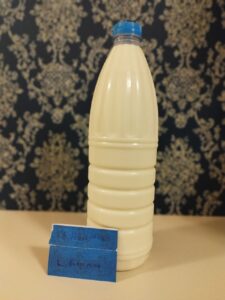
- Прецедете млякото с помощта на фина цедка, за да предотвратите преминаването на нежелани твърди частици.
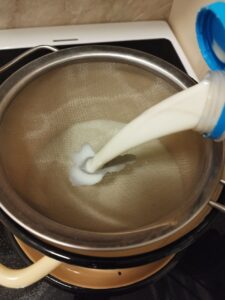
- Загрейте млякото бавно до 93–95 °C и го поддържайте при тази температура за 15–30 минути.
- Охладете до 45–46 °C, като поставите съда в мивка, пълна със студена вода.
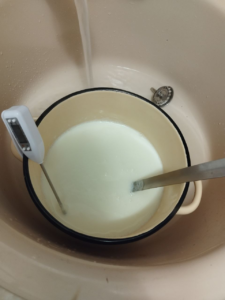
- Добавете закваската. Можете да използвате една супена лъжица (около 50 g) живо българско кисело мляко от предишна партида (това количество е подходящо за около 500 ml сурово мляко) или да използвате количеството лиофилизирана закваска, препоръчано от производителя (за 1–2 L мляко количеството трябва да съдържа поне 10⁸–10⁹ живи клетки на грам).
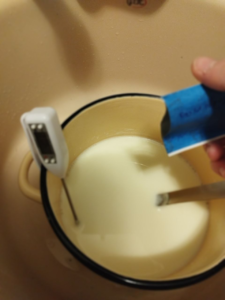
- Инкубирайте, като поддържате бурканите на топло (около 44 °C ± 2 °C) за 4–8 часа, докато млякото се сгъсти и се превърне в кисело мляко. За целта можете да използвате уред за приготвяне на кисело мляко, топла фурна или изолиран термоконтейнер.