Mastering Brown Beef Stock — Technique, Science, and Flavour

Introduction
A good beef stock is the fundamental part of myriads of dishes and sauces. Most of the delicious sauces begin with a stock, so having a good recipe for any type of stock is essential. Brown beef stock is made by gently simmering beef bones, meat, aromatics, vegetables, and herbs for about half a day. Even though it appears to be something very simple, the deep, complex flavour profile is shaped by biology, chemistry, and enough time.
At its core, beef stock is a process of extraction of flavours, lipids, proteins, carbohydrates, minerals, and collagen. All of those come together in the water, creating a flavourful stock. On the other hand, by simmering the stock for prolonged periods of time, alongside the extraction, a process of concentration, as water evaporates, can be observed.
All the components that will make the brown beef stock behave very differently when exposed to heat.
During the cooking process, different reactions occur: the Maillard reaction will contribute to a unique flavour, collagen will transform into gelatine, giving body and a nice mouthfeel to the stock, proteins will contribute to umami, and so on.
A well-prepared stock should be clear, not cloudy; it should have a silky mouthfeel and a subtle sweetness with a clear beefiness.
Beef stock is the cornerstone of countless dishes and cuisines—sauces, soups, stews, braises, gravies, reductions, risottos, noodle broths, casseroles, grain dishes, marinades, and even meat glazes.
Even though it seems like it is nothing more than bones, cold water, and some vegetables, in reality it is a controlled chemical and physical process that has the capability of unlocking the full body of beef’s natural flavour.
For 3L of Brown Beef Stock, You Will Need
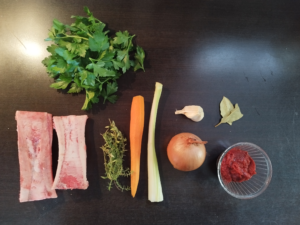
• Beef bones – For this recipe I have used marrow bones (long bones), but you can also use a mix of marrow bones, knuckles, joints, and meaty bones (2 kg).
Knuckles and joints provide collagen; marrow bones provide richness; meaty bones provide umami.
• Onions – 1 medium-sized one, roughly chopped (165g).
• Carrots – 1 medium, roughly chopped (85g).
• Celery stalks – 1 stalk, roughly chopped (35g).
• Garlic – 4–5 cloves, crushed.
• Tomato paste – 30–40g (enough to brush the top of the bones).
• Bay leaf – 1–2 leaves.
• Thyme – A few small sprigs, around 7–8.
• Parsley – 1 small bunch.
• Cold water – 3 L (enough to cover the bones).
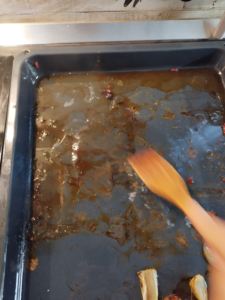
• Hot water – 200g for deglazing.
Step-by-Step Recipe for Beef Stock
1. Prepare the ingredients
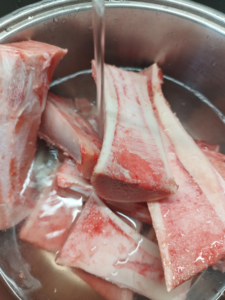
Wash the bones thoroughly with cold water to remove dust or bone fragments.
Coarsely cut the onion, carrot, and celery stalk (those together are called mirepoix). Crush the garlic cloves.
2. Roast the bones
Place the bones in a baking tray together with the vegetables and roast at 230°C for about 60–90 min. Halfway through the roast, get the tray out of the oven and spread a thin layer of tomato paste on top of the bones. Return to the oven and continue roasting. Be careful not to burn the vegetables, bones, and tomato paste.
3. Transfer only the bones to a large pot
Add the browned bones to a pot large enough to hold 3L+ of liquid.
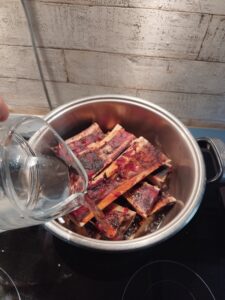
4. Add cold water
Pour in enough cold water to just cover the bones. It was 3L for me.
5. Gently heat to a simmer
Using medium heat, bring the water to a gentle simmer.
Do not boil—boiling will cause emulsification of fat and proteins, resulting in a cloudy stock.
6. Skim the foam
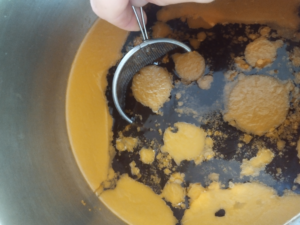
As the liquid reaches a gentle simmer, proteins from the meat and bones will start to denature and rise as foam. Skim it with a ladle, spoon, or a fine mesh to keep the stock clear.
7. Add vegetables and the bouquet garni to the pot
After 15–20 min of simmering, add the vegetables and the bouquet garni (bay leaf, thyme, parsley) to the pot.
8. Simmer for around 12 hours
During the initial first few hours, skim every 10–15 min. As the bones cook, the meat, marrow, and the fat will fall off and rise to the top; make sure to remove them.
As the stock reduces, some parts of the bones will protrude above the liquid, so make sure to push them back below the liquid level.
9. Strain the liquid
Once the 12h have passed, strain the liquid through a fine sieve or cheesecloth. Do not push and force the meat and the bones, because the stock can cloud.
10. Cool the liquid and store
Allow the stock to cool to 60°C (140°F) and then cool rapidly with ice or immediately refrigerate. This will prevent bacterial growth. After one night, any remaining lipids should be solidified on the top of the stock, so make sure to carefully remove it. You can keep the finished stock in the refrigerator for up to 3–4 days, or you can freeze it for long-term storage.
The Science Behind Rich, Clear Beef Stock
How bone types contribute to flavour
Each type of bone is different, and each will contribute differently to the final flavour:
• Marrow Bones: contain bone marrow; they are rich in lipids and proteins. These bones will add richness, beefy flavour, and silky mouthfeel. Ideal will be the femur, tibia, or humerus (rounds or canoe-cut).
• Knuckle Bones (femur, humerus, and tibia): rich in collagen, give more gelatine.
• Neck Bones: contain both meat and connective tissues, providing proteins (umami) and collagen (gelatine), contributing to both taste and mouthfeel.
• Oxtail: contains both meat and connective tissue, providing proteins and collagen. It’s more expensive than the other cuts.
• Shank Bones (radius + ulna (fore shank); tibia + fibula (hind shank)): Shank bones contain meat, tendons, and marrow, making them ideal for beef stock. These will contribute umami, collagen, and richness from the fat.
Creating Flavour — Roasting and the Maillard Reaction
Roasting the bones and vegetables at high temperature (230°C/450°F) triggers the Maillard reaction. This reaction occurs between amino acids (building blocks of proteins) and carbohydrates, creating browning but also complex flavours.
In brown beef stock, bones are roasted, creating a deeper, more robust stock compared to white beef/veal stock, which is done using unroasted bones.
Collagen Breakdown → Gelatine = Body and Mouthfeel
Most of the bones used for this type of stock are very rich in type I collagen.
During the long, gentle simmering:
- Collagen triple helix begins to unwind.
- Bonds begin to break and the triple helix destabilises.
- Collagen converts into gelatine.
- Gelatine dissolves into the stock.
- As the stock cools, gelatine forms a gel.
This contributes to:
• Richer mouthfeel — the gel that is formed traps water, increasing viscosity and giving the stock a full-bodied texture.
• If your stock becomes slightly jellied — a good sign for strong gelatine extraction.
Umami Chemistry — Glutamate and Nucleotides
Glutamate and inosine monophosphate (IMP) are major components of many protein-rich food products such as beef bones and meat.
Both will work synergistically, enhancing the taste of the stock.
In addition to bones and meat, vegetables will also add additional glutamate, rounding up the savoury profile of the stock.
Fat and Emulsion
When simmering bones and meat, fat from the marrow and connective tissue will rise to the top of the solution. Gentle heating and simmering cause the fat droplets to stay larger, while boiling breaks down the fat droplets and helps them emulsify with proteins, causing the stock to become cloudy and greasy.
By controlling the heat, you control clarity and mouthfeel.
Why Clarity Matters — Protein Coagulation
When starting the procedure, an important thing to do is to rinse the bones with cold water and begin the cooking process with cold water as well. This will ensure that soluble proteins, such as albumin, won’t coagulate immediately into very fine particles. When you heat gently and slowly, those proteins will stay together in larger clumps, floating on the top of the solution. Skimming them prevents cloudiness of the stock, removes metallic off-taste, and prevents the emulsification of fat and proteins.
Take Away Message
Good beef stock is not merely just bones soaked in water—it is a carefully controlled chemical transformation driven by science. Roasting creates Maillard compounds, simmering transforms collagen into gelatine, proteins are cleaved to umami-rich peptides, and vegetables and aromatics release their precious volatile molecules. Precise control of the temperature prevents cloudiness, ensuring clarity of the stock, while time allows for complete extraction of everything that gives the stock its depth.
Knowing these intricate details enables you to unlock the full potential of the stock: a rich, savoury liquid with velvety texture that can elevate every dish it touches. This is where food chemistry meets culinary techniques, turning simple ingredients into something extraordinary.
References:
All information used for this post was sourced from the following two books.
- Peterson, J. (2008). Sauces: Classical and contemporary sauce making (3rd ed.). Houghton Mifflin Harcourt.
- Larousse, D. P. (1993). The sauce bible: Guide to the saucier’s craft. John Wiley & Sons.
Brown Beef Stock
Ingredients
Method
- Prepare the ingredients:Gather you ingredients.Roughly chop the onion, carrot, and celery stalk. Crush the garlic cloves.
- Wash the bones with cold water.
- Roast the bones:Bake the bones together with the vegetables at 230°C for about 60–90 min.
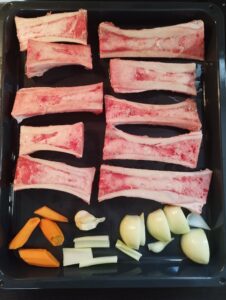
- 30 min in spread a thin layer of tomato paste on top of the bones. Return and cook for another 30-60min. Check them regularly, and if they start to burn, remove them from the oven.
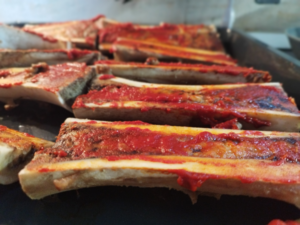
- Add the browned bones to a large pot.
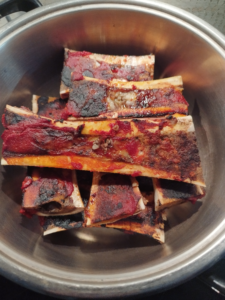
- Add enough cold water to just cover the bones (about 3 L in my case).
- The roasting tray will have browned fond on the bottom; deglaze it with 200 mL of hot water.
- Gently heat to a simmer: Using medium heat, bring the water to a gentle simmer. Do not boil!
- Skim the foam:Foam will start to appear on top of the liquid. Using a ladle, spoon or sieve carefully remove it.
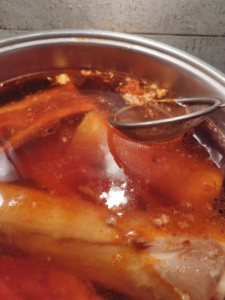
- After 30 min add vegetables and the bouquet garni to the pot.
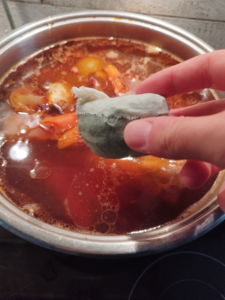
- Simmer for 12h. Skim every 10–15 min for the first few hours. Check from time to time and if the water level drops, add enough water to again cover the bones.
- Strain the liquid:Once the 12h have passed, strain the liquid through a fine sieve or cheesecloth. Do not push and force the meat and the bones, because the stock can cloud.
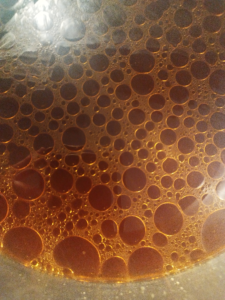
- Cool the liquid and store:Allow the stock to cool to 60°C (140°F) and then cool rapidly with ice or immediately refrigerate. After one night, any remaining lipids should be solidified on the top of the stock, so make sure to carefully remove it. You can keep the finished stock in the refrigerator for up to 3–4 days, or you can freeze it for long-term storage.